In the summer of 2023, the seeds of creating a pollinator garden were planted at a picnic hosted by Penn State. As a master gardener attendee, I happily conversed with Mike and Natalie about their wish and the conversations began!
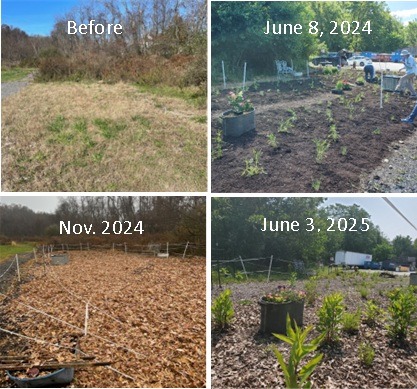
Cardboard was placed on the site, in the hopes of smothering/solarizing weeds in the autumn of 2023. We held meetings over the 2023/2024 winter on the desired ‘look’ of the garden, more like a meadow, with a meandering path. The soil was a big consideration. It was more like rock with a little dirt involved!
After doing a soil sample, analyzed by Penn State and determining no harsh chemicals existed, we began the process of plant selection, those that could actually grow and thrive in these conditions and design approval, including some items that were upcycled as containers or points of interest within the garden.
In Spring 2024, we removed the cardboard. Some stubborn weeds still existed and an application of herbicide was necessary. We added 2 inches of good quality mulch. Finally, after clearing and readying the site, in early summer 2024, we planted native plant plugs. Native plants are designed to thrive in our local conditions. After much research, we planted butterfly weed, goldenrod, little bluestem grass, allium cernuum, lanceleaf coreopsis, purple coneflower, rudbeckia, wild bergamot, dwarf asters and native sedges for ground cover. The hot summer continued and watering was essential. In autumn 2024, we had access to leaves from a landscape company. These were applied for both winter insulation and soil creation.
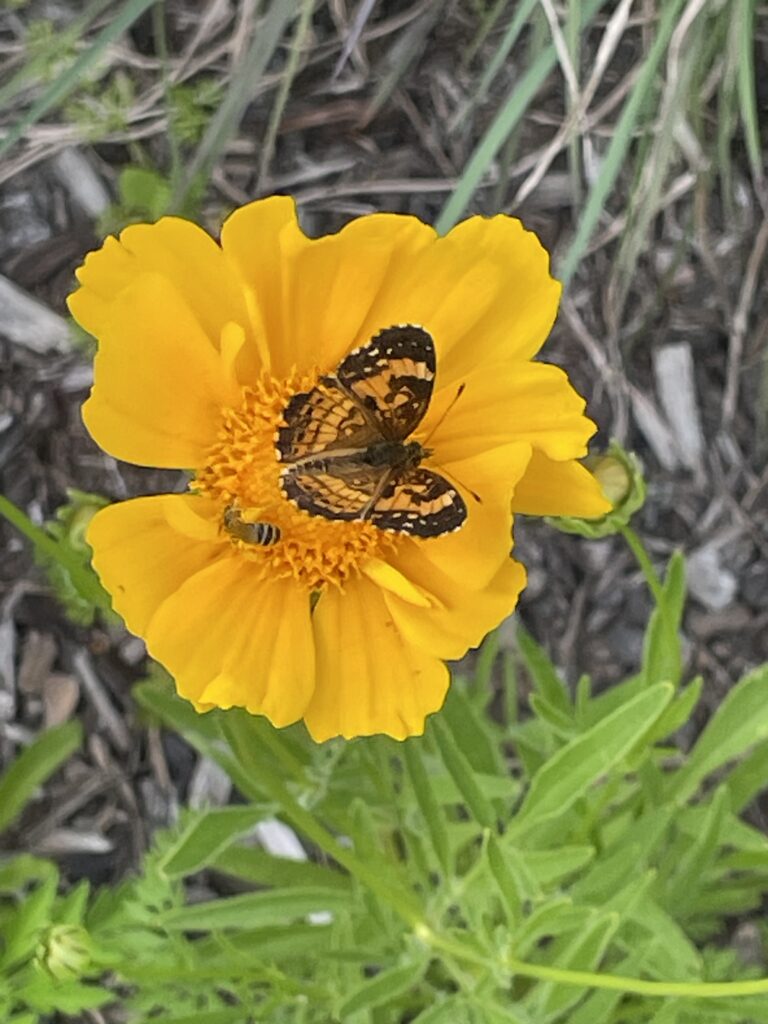
In Spring 2025, we had soil and returning plants! The ‘volunteer’ section of common milkweed grew and we saw monarch butterfly caterpillars munching there. The patch of native daisies returned. Weeds were removed but native fleabane was allowed to grow and multiply. The bird houses were occupied and butterflies visited. Nature had found the garden and was welcomed. It worked!
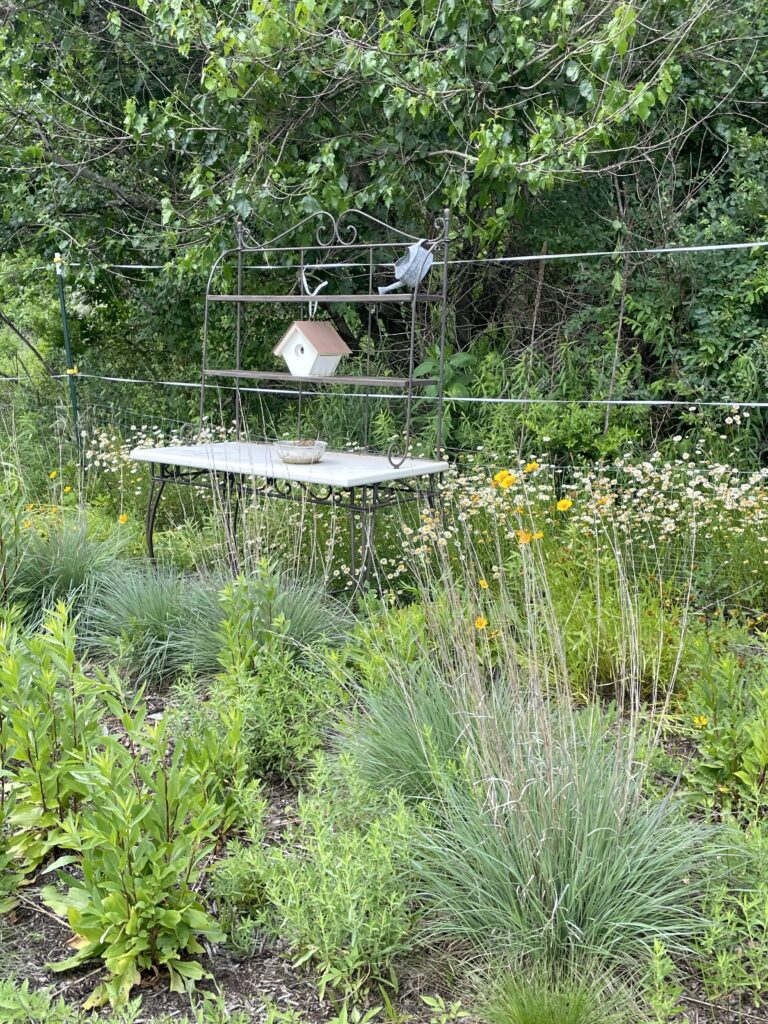
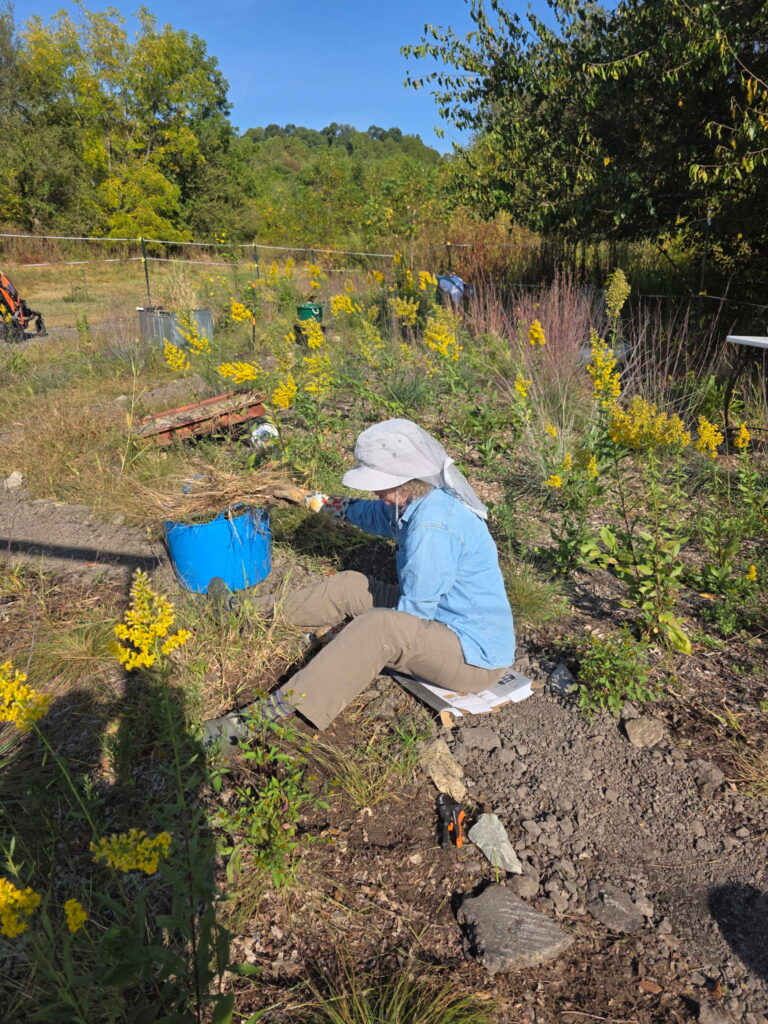
Now, in the second full summer, we are seeing plants grow and expand. The rudebeckia is dropping seeds. Plants are growing which are sometimes found by visiting deer or bunnies. We hope to deter them with the fence, which, like most gardens, is sometimes observed and sometimes not. Our redbud tree was chewed and must be replaced and anything tasty must be placed within the fence! These are the challenges that any garden faces because native wildlife likes native plants too! So, we are tolerant and observant of these challenges, always working with nature.
There are some bare spots today and the plan is to add Amsonia hubrichtti, mountain mint, and seeds in the spring, plants that will be less tasty and add structure, color and additional habitat for insects. The grasses and coneflowers create seeds for visiting or migrating birds, all without getting them from a plastic bag! As moths or butterflies lay caterpillar eggs on host plants within, birds find the habitat desirous as caterpillars provide the essential food for baby birds. We’ve watched a Carolina wren have 2 clutches of baby birds this year.
I am grateful to both Mike and Natalie for the trust and confidence they placed in me to design and create our pollinator garden. Along with other master gardener and garden club members to help plant and maintain the garden. Come visit, take a scheduled tour and learn more about the importance of native plants and creating habitat and beauty for nature and humans.
Patti Flowers Jacobina
Master Gardenener, PSU
Phipps Botanical Garden Sustainable Landcare Advocate
Creation Care Network of Southwestern Pennsylvania