Illegal Dumps
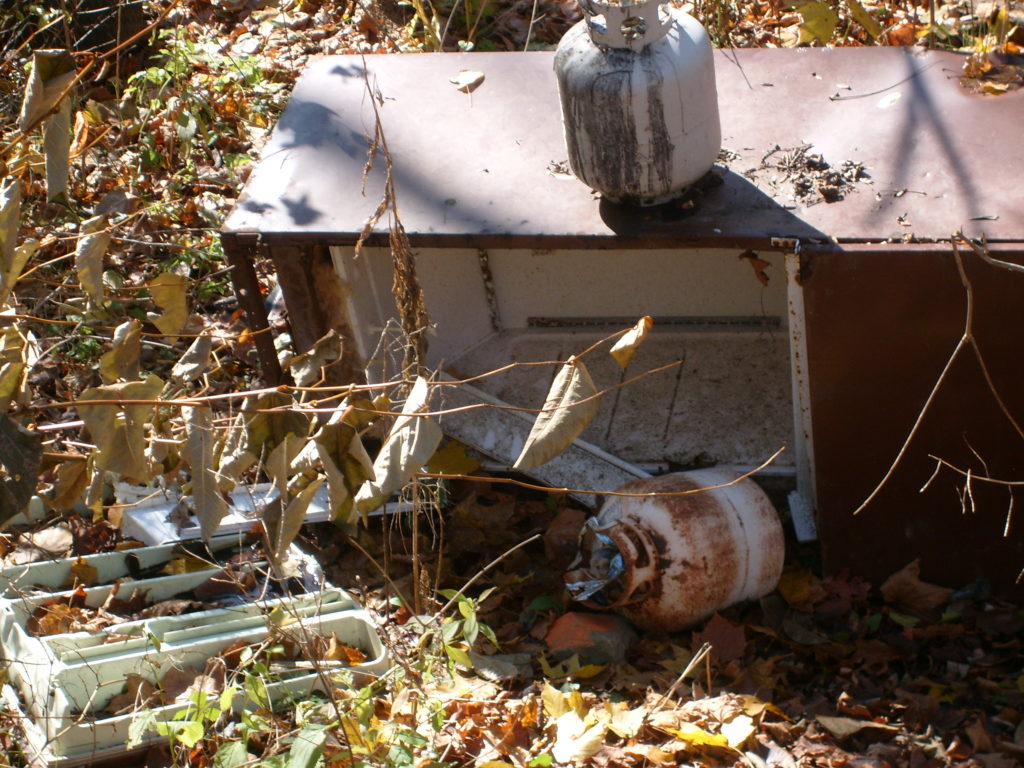
Illegal dumping happens when trash or other waste is discarded in unauthorized locations instead of being taken to an approved disposal or recycling facility. It is often done to avoid disposal fees or because proper disposal takes more time and effort.
Common illegal dumping sites include remote roads, wooded areas, vacant lots, and stream banks. Items commonly found at these sites include tires, furniture, appliances, construction materials, household garbage, and electronics, all of which can threaten wildlife, pollute waterways, and create safety hazards.
Impacts of Illegal Dumping
Illegal dumping has lasting impacts on people, wildlife, and communities. It can:
- Attract pests such as rats and mosquitoes that spread disease.
- Source of physical injury for humans and animals due to broken glass, rusty metals, and toxic substances.
- Pollute soil, waterways, groundwater, and drinking water.
- Harm wildlife and aquatic life through toxic contamination.
- Damage parks, forests, and other natural areas.
- Lower property values and community pride.
- Cost taxpayers millions of dollars in cleanup efforts every year.
How to Report a Dumpsite
Illegal dumping is ILLEGAL under Pennsylvania law. If you come across a dump site, please report it. Always start at the local level as local officials are familiar with properties and residents. See if any of the following exists where the violation occurred: Local Police or Municipal Code Enforcement Officer (local or county).
If local agencies do not exist or if their response is unsatisfactory, contact one of the following state agencies:
- Keep Pennsylvania Beautiful On-line Report Form
- State Police
- Dept. of Environmental Protection
- Fish and Boat Commission
- Game Commission
- Dept. of Conservation and Natural Resources
- Office of Attorney General Environmental Crimes Section
Neither Westmoreland Cleanways and Recycling nor Keep Pennsylvania Beautiful have enforcement authority.
To learn more about what type of incident each agency responds to as well as how to contact each agency visit here.
When reporting:
- Have as much information as possible about the dump location such as route numbers/street names, state park/forest name, game land number, trail name, landmarks, GPS coordinates, municipality name, etc.
- Have a general idea of the amount of and the types of material dumped, for example is it bags of trash, construction material, tires, furniture, etc.
For your own safety: If you observe someone dumping, DO NOT APPROACH THEM. Instead, note down the license plate number and description of vehicle (make, model, year, condition of vehicle), the date and the time of the incident, and the traveling direction of the vehicle. If photos or videos can be safely taken, snap a few.
Reporting an illegal dump site helps protect our neighborhoods, waterways, and public spaces. If you spot one, don’t ignore it—document what you can safely and report it to the appropriate authorities. Your report could be the first step toward getting the site cleaned up and preventing further dumping.
Tires
Discarded tires are more than just an eyesore – they pose serious environmental and public health risks. Tires collect rainwater, creating ideal breeding grounds for mosquitoes, and they can release harmful chemicals into soil and waterways as they break down. Because tires take decades to decompose, they remain in the environment for many years if not properly recycled or disposed of.
Mosquito Breeding Grounds
A single discarded tire can become a breeding ground for hundreds of mosquitoes after it fills with rainwater. Dumped tires collect rainwater, creating stagnant pools of standing water, provide shelter from predators, and heat absorbed by black tires make them especially attractive for mosquito reproduction. Mosquitoes are responsible for more human deaths than any other animal because they can transmit diseases. In western Pennsylvania, the most common mosquito-borne illnesses are West Nile virus and Jamestown Canyon virus, while Eastern equine encephalitis and La Crosse encephalitis are much less common but remain potential risks.
Risk of Fire
Littered tires can ignite from sparks, embers, or even spontaneous combust. Once a fire starts, it is extremely difficult to extinguish because water alone cannot cool the rubber effectively. In some cases, tire fires can burn for days or weeks, releasing toxic fumes and smoke releases toxic heavy metals, and carcinogens into the air. The ash and soot can be carried by the wind far beyond the fire site. The tires also melt into hazardous oils that contaminate soil and local water supplies.
Degradation
Tires don’t “decompose” in the biological sense. Instead, they undergo slow chemical and physical degradation over decades. Over time, some additives and chemicals can leach into surrounding soil and water contaminating them with heavy metals (zinc, cadmium, copper, lead), hydrocarbons, and other toxic chemicals. These pollutants can harm soil microorganisms, reduce plant growth, and enter waterways via stormwater runoff, where they threaten aquatic life causing cell damage, hormone disruption, weakened immunity and even death.

Cigarette Litter
Cigarette butts are the number one littered item in the world. They do not bio-degrade. Instead, the filters are made of non-biodegradable plastic (cellulose acetate) filled with toxic chemicals that harm wildlife and pollute water by leaching carcinogens like arsenic and lead. Besides the environmental impact, cigarette butt litter around a business can create a negative first impression, deterring customers and project a careless brand image for a business.
Storm Drains
Keeping storm drains free of debris and litter might seem like a small thing, but it plays a big role in protecting our community, waterways, and neighborhoods.
Aquatic Litter
Anything that goes into a storm drain flows directly into a nearby creek, river, or lake. Unfortunately, when yard waste and trash flow through these drains it can harm our local waterways. Litter like plastic bottles, food wrappers, and cigarette butts can harm wildlife, pollute the water, degrade water quality, and eventually become the dreaded microplastics.
Algae Blooms
Leaves and grass clipping flowing through storm drains are a problem, as they can trigger harmful algae blooms in waterways that affect aquatic life and recreation areas.
Flooding
Leaves, trash and other debris can build up so much at storm drains that the grates become clogged and rainwater has nowhere to go. This can lead to localized flooding, water pooling on roads, and even damage to homes, businesses, and infrastructure.
Safety Tips for Cleaning a Storm Drain
- Always wear gloves
- Only pick up trash & debris on the surface
- Never reach into storm drains
- Wear bright clothing and be mindful of traffic
- Clean the drain in dry weather – before rain is forecasted
- DO NOT try to clean the drain grate with standing water on top of it
Marine Litter

The litter in our neighborhoods does not just affect us locally. It is a global problem. During storms, litter is washed down storm drains, and into streams, rivers and ultimately into the ocean. Aquatic litter negatively impacts fishing industry, food industry, employment, tourism and real estate.
Impacts of Aquatic Litter
- Reduces the aesthetic and recreational value of an area
- Breeding ground for bacteria, viruses, and parasites, leading to infections like cholera, typhoid, and hepatitis
- Declining fish populations
- Damages boats and docks
- Creates microplastics and bioaccumulation of plastic in foods
- Expensive Cleanups
Marine litter is a global problem, but every action counts. By reducing waste, disposing of trash properly, and preventing litter from reaching our waterways, we can protect marine life, preserve healthy ecosystems, and help ensure cleaner oceans for future generations.
For more detailed information about the effects of marine litter, research the Great Pacific Garbage Patch, North Atlantic Garbage Patch or Midway Atoll.